

Waldorf Background: Mealtime
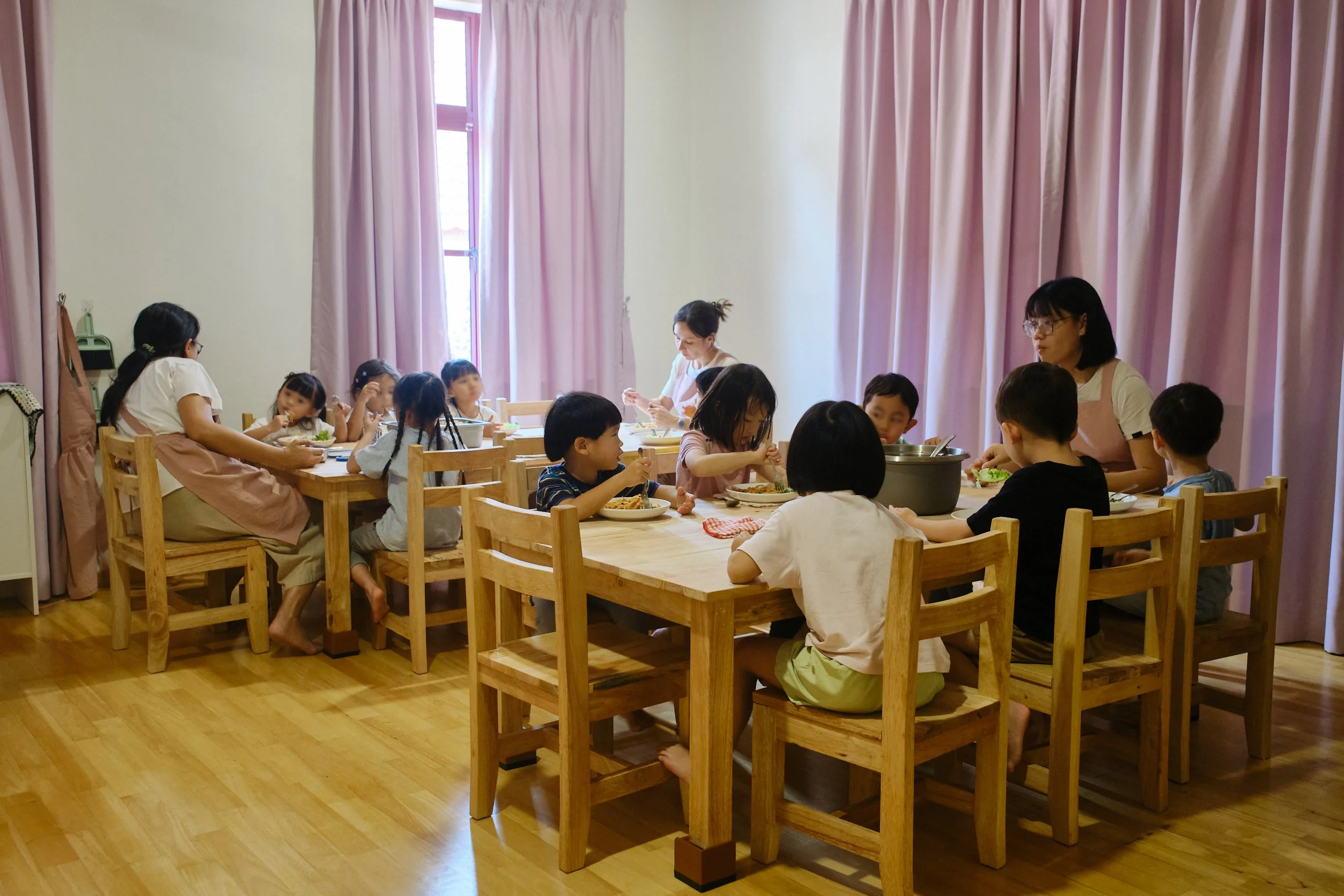
In the Waldorf kindergarten routine, mealtime follows a fixed rhythm that naturally teaches children about the days of the week and the passage of time. The meals served are thoughtfully planned to complement the artistic activities of each day and are repeated weekly at a consistent time. This steady rhythm provides children with a sense of structure and security.
During mealtime, children do more than simply eat or learn about days and weeks. It is also a valuable opportunity for teachers to observe their physical, social, and emotional development.
From a physical development perspective, teachers observe the children’s grip while holding cutlery, their hand control when scooping food, their sitting posture, and their jaw strength while biting and chewing. Through these observations, teachers evaluate each child’s stage of development and provide imaginative, age-appropriate guidance. Teachers are also able to reflect and provide feedback if a child requires additional support, particularly in areas such as jaw development.
From a social development perspective, children learn language beyond their mother tongue as they communicate with friends and teachers. Through repetition and imitation of the teacher’s speech, children begin to connect their movements with the words they speak. They expand their vocabulary by listening and gradually construct their own sentences when conversing with peers and adults.
Emotionally, children learn to regulate themselves and prepare for the meal. Each mealtime begins with a blessing to express gratitude to nature and to the people who prepared and served the food. This ritual helps children calm themselves, center their attention, and become present in the moment.
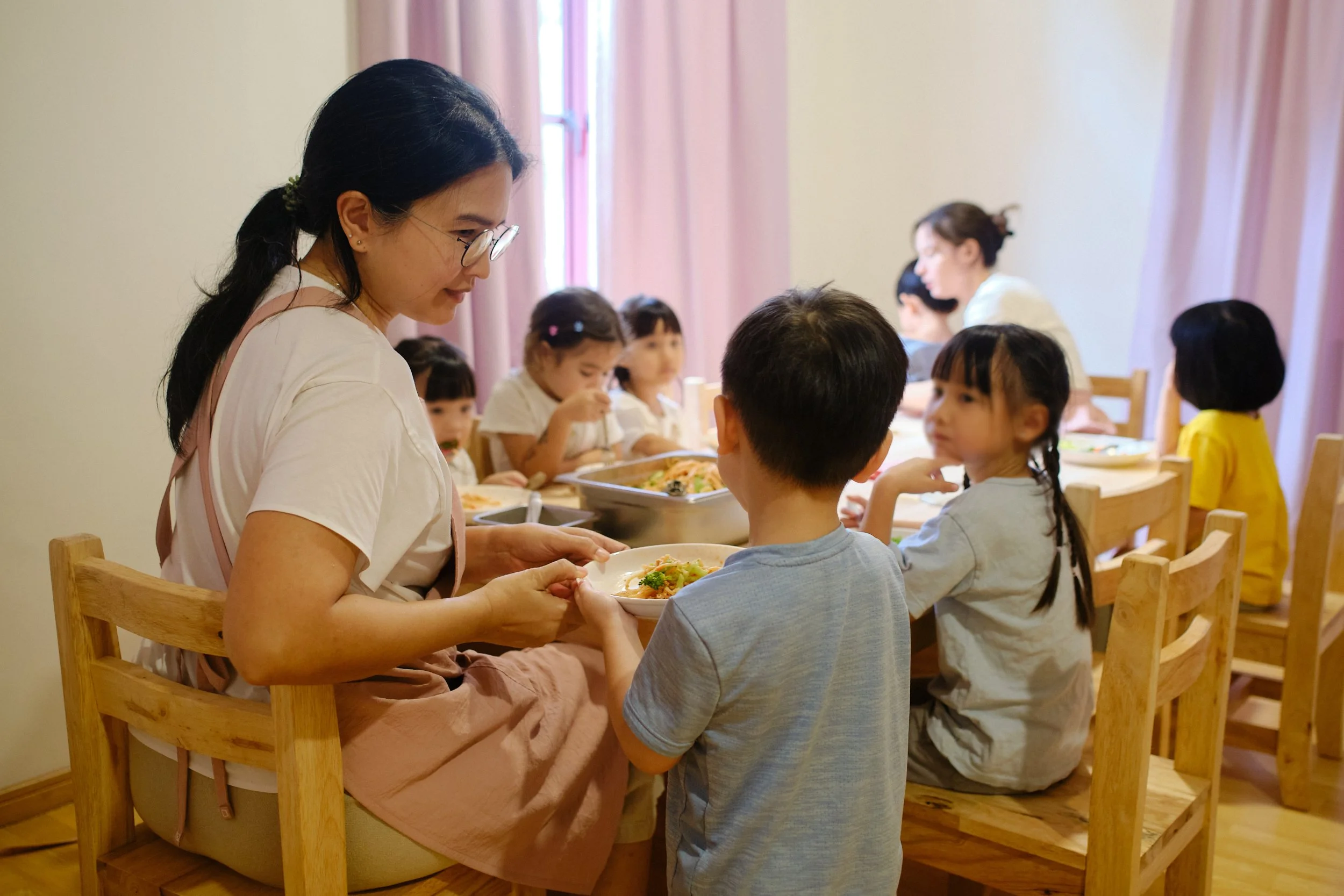
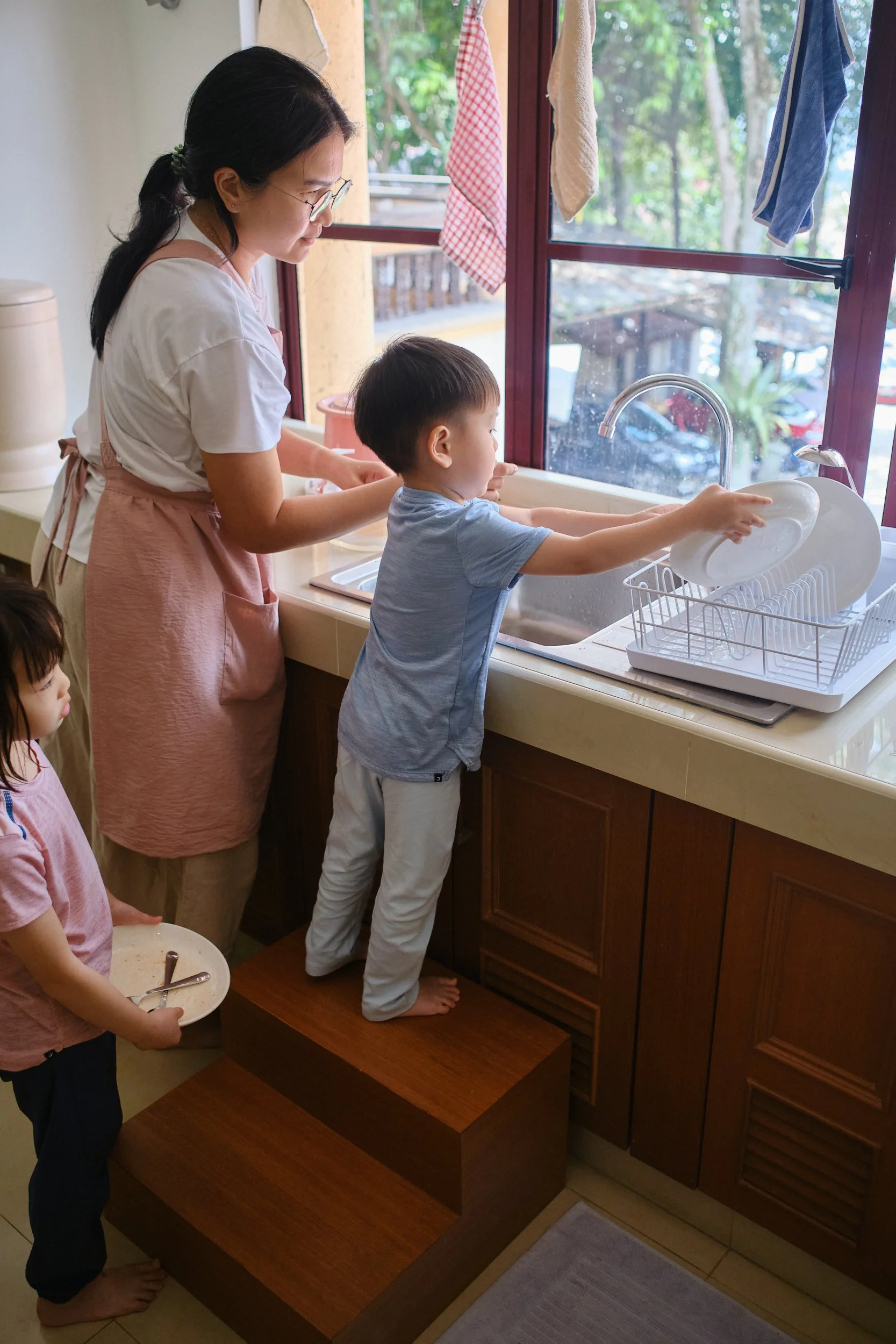
Mealtime also allows teachers to gain insight into a child’s home environment. Habits and practices can be observed through gestures, food preferences, and eating behaviors. For example, children wipe and wash their dishes after eating at school. Children are naturally capable with their hands; what they need are opportunities and space to work. They are doers, and they come to understand the world first through their hands. Involving them in hands-on tasks nurtures their sense of responsibility, belonging, and care.
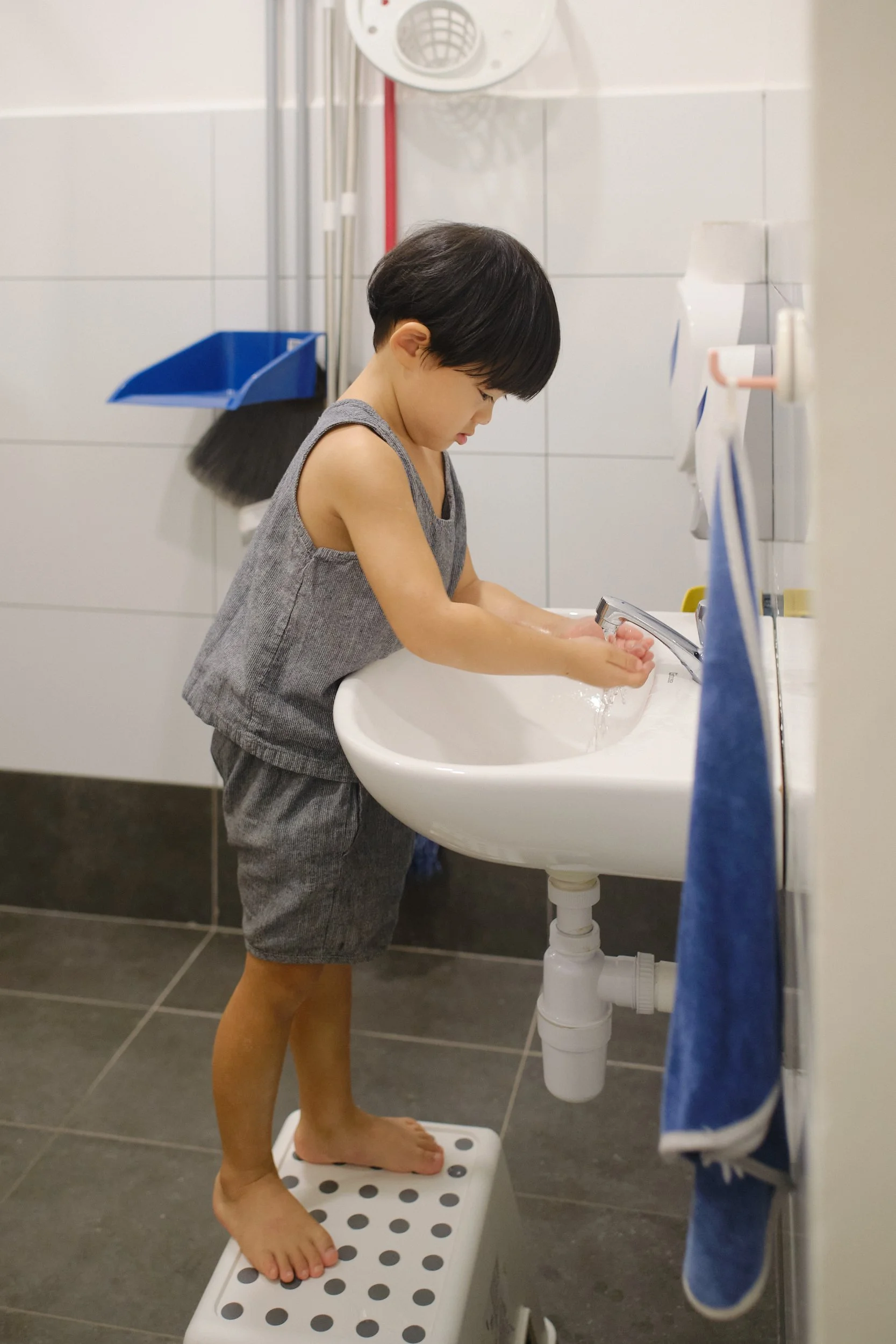
Caring for their own hygiene is also an important aspect of learning, as it forms part of developing independence. Self-care is a broad and essential area in a child’s growing journey. It is significant because it is where children first learn to take responsibility for themselves before extending that sense of responsibility to others and to their surrounding environment.